
About
Hi. I’m Lyn.
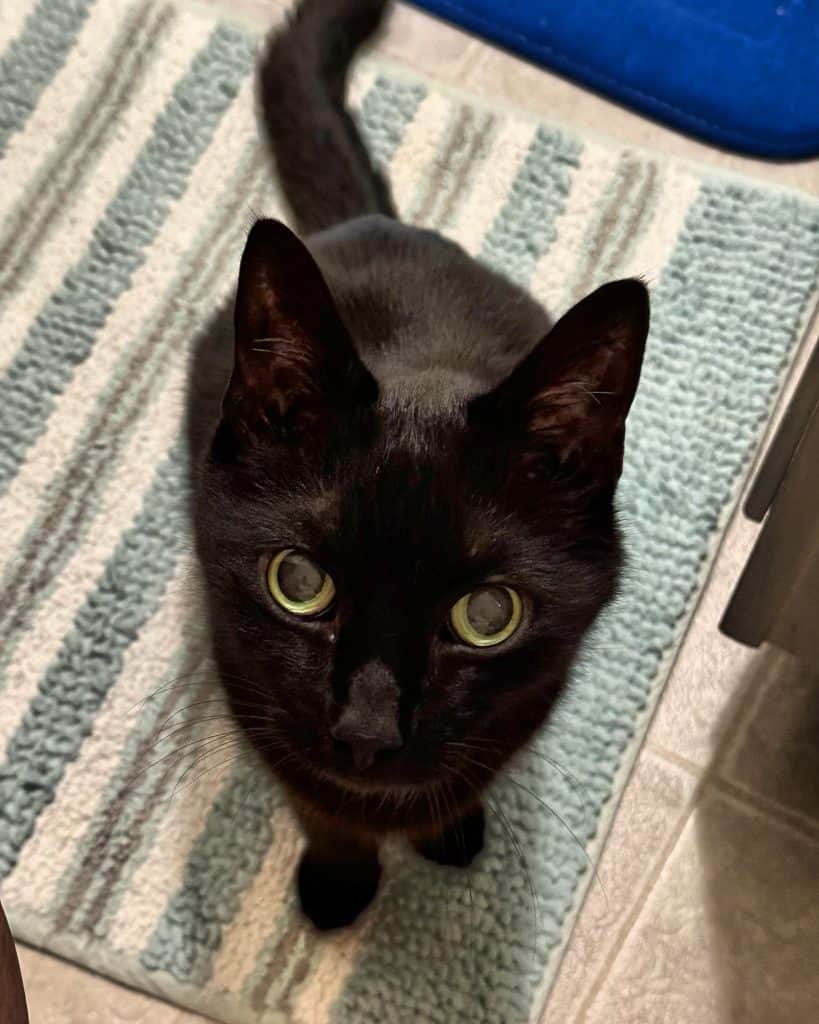
I’m a Boston girl, born and raised in Everett, Massachusetts, currently living in Chelsea, MA with my husband Steven and our ancient and magnificent black cat, Jack, who is turning 19 this fall and has absolutely no intention of slowing down. I write about chronic illness — the real version, not the inspirational one — because someone has to.
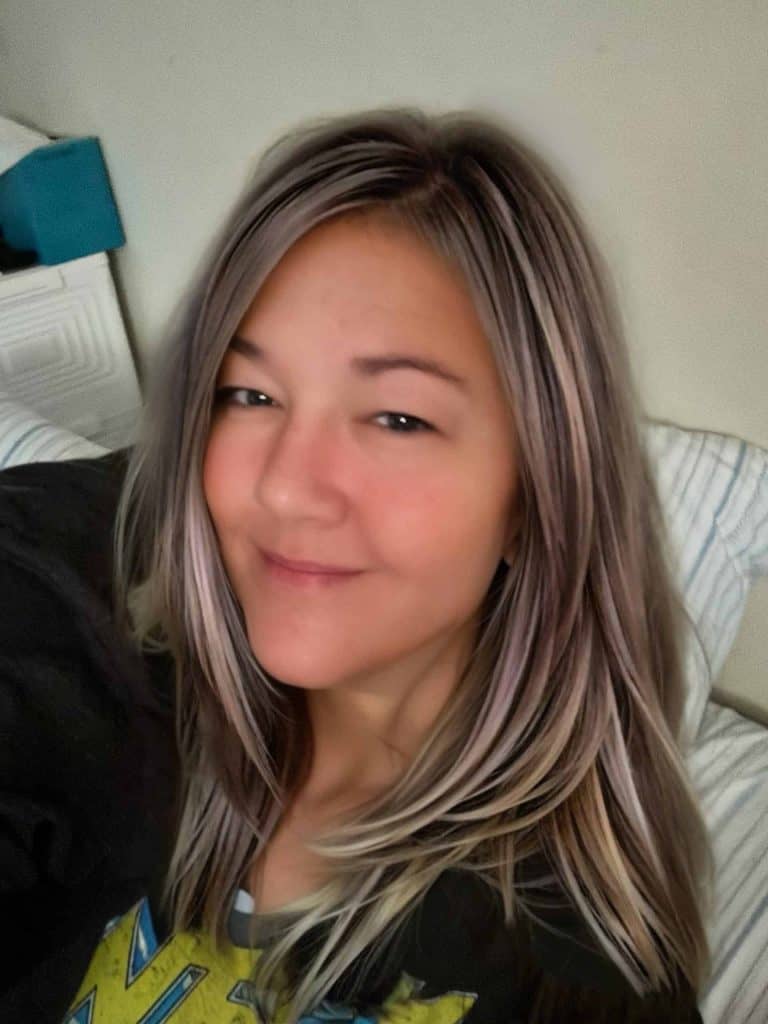
Steven and I have one of those memorable stories. We were fifth graders together at Our Lady of Grace School in Everett in 1981 — he’d been there since first grade, I was the new girl. We lost touch through high school, reconnected on Facebook in 2009, and eventually found our way to margaritas in Melrose. The rest, as they say, is history. We got married on September 10, 2022, in my sister Jean’s backyard in Derry, New Hampshire, surrounded by the people we love most.
Our big dream is to travel full-time in an RV someday. We’re working toward it. In the meantime, I grow things on my porch when I have enough spoons, dig through genealogy records looking for dead relatives as long as the brain fog allows, and take gentle movement seriously because my body requires it, even though it fights me every step of the way. Jack supervises all of it from whatever surface he has decided belongs to him that day. That surface is usually me.
I’ve been working since I was eleven years old. Literally. I got my Red Cross babysitting certification the day I turned eleven and started making my own spending money immediately, because that’s who I am. My first real job was at a neighborhood pharmacy — I was the first teenage girl they’d ever hired there. I worked part-time at a bank and at Jordan Marsh through college, and by 1994 I had started what would become a 26-year professional career in healthcare and higher education administration.
I spent the first half of that career at Harvard Vanguard Medical Associates, starting as an administrative assistant and working up to supervisor of several departments. Then a decade at Cambridge Health Alliance supporting the Hospital Administrator/Associate Chief Nursing Officer, the Emergency Department Chief, and the hospital managers — the kind of role where people hand you confidential things because they know you’ll handle them correctly. In 2015, I started working at MIT in Cambridge, MA. I was the administrative assistant to the Director of Facilities Engineering and the Systems Engineering Department engineers. I loved my new job and planned to retire from there when I was older. Unfortunately, my body had different plans. My worklife ended in 2019 when I became permanently disabled. I never saw this coming.
None of us really do.
I’ve been dealing with symptoms my whole life — fainting as a kid, hives nobody believed existed, a spine that was deteriorating while doctors told my mother I was making things up, because I “was just too young to have back problems”. By the time I finally got some answers, I had accumulated quite a list: Dysautonomia with POTS, Small Fiber Neuropathy, Gastroparesis, Chronic Kidney Disease, Restless Legs Syndrome, disordered sleep, autoimmune urticaria, Degenerative Disc Disease, chronic pain, fatigue, and a seronegative autoimmune process that is definitely attacking something — we just don’t know what yet.
My worst daily battles are with Small Fiber Neuropathy and Gastroparesis, with autonomic dysfunction running underneath all of it. Together they create a symptom list long enough to fill its own post. And it will. That’s what this blog is for.
I didn’t arrive here gracefully. I reached this point through medical gaslighting, years of test results that were both normal and abnormal without making any sense, all linked to a very unusual body. It was a slow and frustrating process of learning to advocate for myself because no one else was going to do it. The crucial lesson, learned the hard way, is to be your own advocate. The system is not designed to connect the dots; you must do it yourself or find the one doctor who will.
Salt, Spoons, and Syncope is where I tell the stories I wish someone had told me. Honest writing about what chronic illness actually looks like — not the inspirational version, not the ribbon-and-flowers aesthetic, not “everything happens for a reason.” The real version, including the dark humor, because sometimes that’s the only reasonable response to completely unreasonable circumstances.
What’s a Spoonie?
Spoon Theory was created by Christine Miserandino as a way to explain chronic illness to someone who’s never lived it. She used spoons as a metaphor for energy — not the unlimited, refillable kind most people take for granted, but a fixed, finite number that has to be rationed across an entire day. Shower, get dressed, make a meal, have a conversation — each one costs a spoon. When they’re gone, they’re gone. You don’t get more just because the day isn’t finished yet. People who live this way started calling themselves Spoonies, and it stuck — because it finally gave a name to something that had always been real but almost impossible to explain. If you’ve never heard the term before, Christine’s original essay, The Spoon Theory, can be found on here. It’s worth the read.
My blog is for the person who was told for years that what they were feeling was in their head. I’m writing this for those exhausted from explaining their diagnosis over and over again.
It’s especially for the newly diagnosed, who just got handed a diagnosis, a prescription, and sent home to figure out the rest. And this is for the family member trying to understand what their person is actually going through.
I’m not going to tell you to think positive. I’m going to sit here with you and tell you everything I figured out the hard way.
No judgment here. You’re among people who get it.
💜 Lyn — and Jack
My Approach
No toxic positivity. No forcing yourself to smile like a hostage. No pretending the messy parts don’t exist.
What you will find here is something different: Healthy Optimism — the kind that doesn’t demand you “look on the bright side” while your life is actively on fire. I believe things can get better, and I also believe every feeling you have on the way there deserves space. The grief. The rage. The bone‑dry humor that shows up when you’re running on fumes. The days when you just need someone to say, “Yeah, this is hard,” without immediately slapping a silver lining on top.
This is a place where the whole spectrum of being human is allowed to exist — unedited, unshamed, and unhurried.
If You’re New Here
A great place to begin is the Start Here page — it’s where I introduce what this blog is about, share the posts that lay the foundation, and make sure you leave with something useful, no matter where you are in your journey.